
How to use video poker strategy charts begins with one practical rule: a chart is only accurate when it matches the exact paytable on the screen. A 9/6 Jacks or Better schedule pays 9 coins for a full house and 6 for a flush, returning 99.54% with optimal decisions. That percentage does not promise a winning session, because short runs still swing sharply around rare high payouts. This guide turns a ranked reference sheet into a repeatable decision routine for every five-card deal at Weed Seen Casino.
How to use video poker strategy charts to optimize expected returns
Learning how to use video poker strategy charts is not about predicting the next draw; it is about selecting the hold with the strongest mathematical return. In full-pay Jacks or Better, the royal flush pays 800 coins per coin only when the usual five-credit maximum activates the 4,000-coin award. A player checking the schedule before starting avoids applying a high-return chart to a weaker machine.

Before comparing cards, identify the game variation and its full-house and flush payments. A 9/6 schedule is materially different from 8/5, even though both screens may be labelled Jacks or Better. For 1,000 coins cycled through play, a 99.54% theoretical return implies an average loss of about 4.60 coins before variance, while a 97.30% schedule implies roughly 27.00 coins.
Understanding the structure and operating logic of strategy charts
A strategy sheet is organized as a descending priority list of possible holds, not as a list of final results. Starting hands can contain more than one tempting option, such as a paying pair alongside four cards to a flush. The player scans downward from the top and stops at the first line matching the cards in hand.
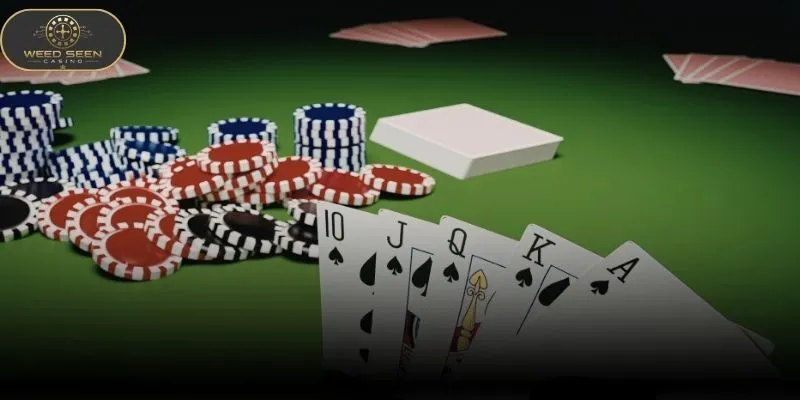
Defining how to use video poker strategy charts in video poker lobbies
In a game lobby, how to use video poker strategy charts means using a variant-specific ranking sheet that tells a player which original cards to keep before pressing draw. For 9/6 Jacks or Better, the upper area typically protects made premium outcomes such as a royal flush, straight flush, four of a kind, full house, flush, straight, three of a kind and two pair. Lower lines handle incomplete combinations, including four to a royal, low pairs, four to a flush and high-card structures.
Arranging combination priorities from highest to lowest
When learning how to use video poker strategy charts, treat the chart as a hierarchy of competing opportunities rather than a payout poster. A completed royal, straight flush or four of a kind naturally remains intact, while a completed full house is held rather than broken for a speculative draw. More difficult choices appear below made hands: four to a royal is commonly placed above a flush, straight or lower partial draw in full-pay Jacks or Better.
Why charts minimize the casino edge as far as possible
Using how to use video poker strategy charts reduces avoidable errors because the machine’s payout schedule and draw probabilities are fixed before each decision. On the referenced 9/6 Jacks or Better schedule, optimal play produces a 99.54% theoretical return, equivalent to a house edge of about 0.46%. That edge remains positive, so a chart does not reverse the casino advantage or eliminate losing sessions.
A detailed guide to consulting and applying charts during play
The workflow for how to use video poker strategy charts should take place in the same order on every hand: verify the schedule, read all five cards, find the highest matching chart line, hold only the instructed cards and then draw. This sequence avoids the common mistake of locking cards before noticing a stronger suited combination. Beginners can practise with free-play hands and record whether their chosen hold matches the reference sheet.

Step 1: Observing and analyzing the five initial cards
The first operational step in how to use video poker strategy charts is a slow, complete scan of ranks and suits before touching any hold button. Check for completed paying hands first, then four-card premium draws, pairs, three-card opportunities and single high-card options. With Q♥ Q♣ 9♠ 6♦ 2♥, the pair of queens is immediately visible and should not be discarded for disconnected high-card hopes. With 10♦ J♦ Q♦ K♦ 4♣, the suited four-card sequence deserves careful chart comparison because it can draw into either a straight flush or a flush.
Step 2: Matching existing combinations against chart priority
The second stage of how to use video poker strategy charts is to list plausible holds mentally and choose whichever appears first on the correct sheet. Consider A♣ A♦ K♠ Q♣ J♥: the paying pair of aces has priority over keeping scattered high cards, so hold the aces and discard three. Consider 9♠ 10♠ J♠ Q♠ 2♦: four to a straight flush is located well above a lone high card and should be retained as a four-card draw. Never select the line that sounds more attractive; select the line ranked higher for the paytable being played.
Step 3: Deciding which cards to hold and which to draw
The final action in how to use video poker strategy charts is straightforward only after the correct line has been found: lock every card named by that line and release every other card. For K♣ K♥ 8♣ 5♦ 3♠, retain the kings and draw three replacements, because a high pair already earns a payout in Jacks or Better. For A♥ K♥ Q♥ J♥ 7♠, retain the four royal-suited cards and exchange the unrelated seven, accepting higher short-term volatility for the chart-ranked expectation. Press draw only after comparing the highlighted holds with the intended combination.
>>> Read More: Online Casino License Guide For Weed Seen Casino 2026
Conclusion
Mastering how to use video poker strategy charts turns video poker from impulsive card selection into a structured comparison of paytable, pattern and ranked hold. The 9/6 Jacks or Better example demonstrates the measurable value of accuracy: optimal decisions target 99.54% return and leave approximately 0.46% house edge, while weaker schedules begin with a larger disadvantage.