
Online poker guide gives new players a clear route before joining a free-play or real-money table. It explains card structure, betting actions, hand strength, and one complete round through practical numbers. Choose a trusted brand, enter a practice room, and build confidence through careful decisions at Weed Seen Casino.
A sharper overview of online poker for beginners

Poker online is usually played as Texas Hold’em with one 52-card deck and no jokers. Each player receives 2 private cards, then up to 5 shared cards appear on the table. The final result uses the best 5-card hand from 7 available cards. Most casual tables seat 2 to 9 players, so position changes every round.
A useful Online poker guide explains the table before tactics. The small blind and big blind force action before any voluntary bet appears. At a $0.01 or $0.02 table, blinds add $0.03 to the pot immediately. That small number matters because every later bet grows from this starting point.
Clear rules of online poker and table betting
Hold’em looks fast, but its structure is strict. The dealer button moves one seat clockwise after each completed hand. The two seats left of the button usually post the small blind and big blind. Because the button acts late after the flop, it often holds more information.
Before choosing actions, understand that software handles shuffling, dealing, pot counting, and side pots. The player controls timing, bet size, position awareness, and hand selection. A $1 stack at a $0.01 or $0.02 table equals 50 big blinds. This stack depth gives enough room for pre-flop and post-flop choices.
Card count and dealer position at the digital table
One deck has 4 suits and 13 ranks, creating 52 unique cards. A two-card Hold’em starting hand has 1,326 exact combinations. Pocket aces appear in 6 combinations, or about 0.45% of deals. Any pocket pair appears 78 ways, which is about 5.88% pre-flop.
The dealer button does not mean that player deals cards manually online. It marks late position and changes the order of action. At a 6-player table, under the gun acts first before the flop. After the flop, the first active seat left of the button acts earliest.
Check, call, bet, raise, and fold made practical
Check means passing action without adding chips when no bet is pending. Call means matching the current bet to stay in the hand. Bet means opening the wager when nobody has bet in that round. Raise increases a previous bet, while Fold gives up the hand.
Here is a direct example. If the pot is $0.10 and nobody has bet, you may check or bet $0.06. If another player bets $0.06, you can call, raise to $0.18, or fold. Online buttons make choices visible, but understanding them prevents rushed clicks.
Online poker guide to hand ranks from royal flush to high card
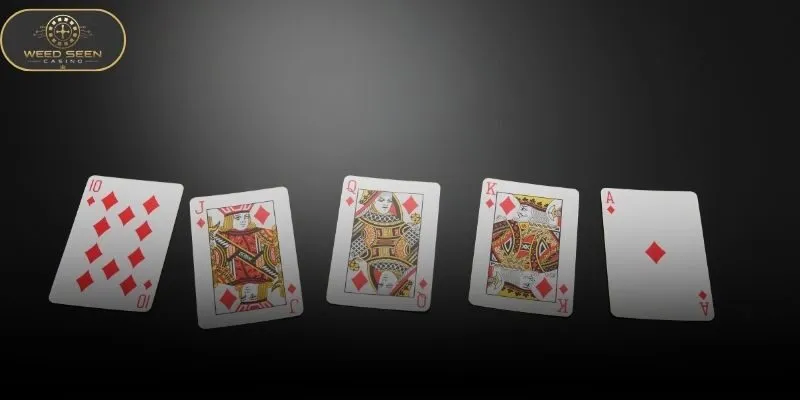
Hand strength follows one fixed order at every Hold’em table. Royal flush ranks highest, then straight flush, four of a kind, full house, and flush. Straight, three of a kind, two pair, one pair, and high card follow next. A pair of aces beats kings, but any two pair beats one pair.
Numbers make rankings easier to remember. A flush uses 5 cards of the same suit, while a straight uses 5 connected ranks. A full house combines 3 cards of one rank with 2 cards of another rank. When two players share a category, kickers often decide the pot.
How Online poker guide maps a complete hand
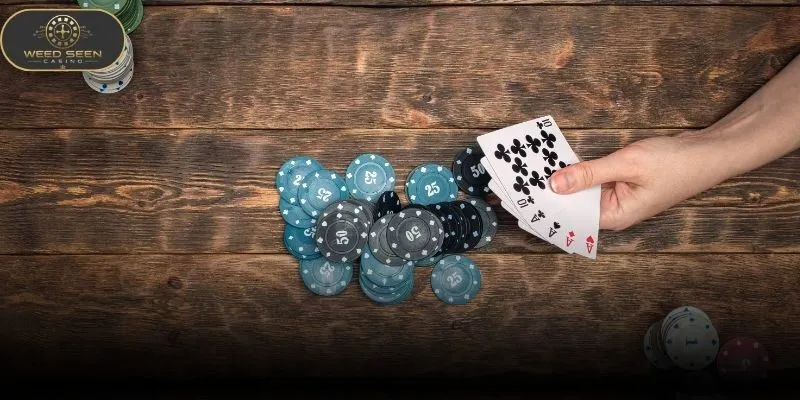
A full Hold’em hand has four betting streets: pre-flop, flop, turn, and river. The pot can end early when all opponents fold to one player. If at least two players remain after river betting, showdown decides the winner. This structure gives every active player repeated chances to bet, check, call, raise, or fold.
Use a clear $0.01 or $0.02 table example. Six players sit with stacks between $1.00 and $2.00. The small blind posts $0.01, and the big blind posts $0.02. Before any raise, the pot already contains $0.03.
Why pre-flop decisions matter before shared cards appear
Pre-flop starts after each player receives 2 private cards. The first player left of the big blind acts first. If that player raises to $0.06, others must fold, call $0.06, or raise higher. Starting hand quality, position, and stack depth shape that decision.
There are 169 common starting hand types when suits are grouped. They include 13 pocket pairs, 78 suited non-pairs, and 78 offsuit non-pairs. Ace-king suited is strong because it can make top pair, straight, or nut flush pressure. Seven-two offsuit is weak because it rarely connects strongly with many boards.
Reading the flop, turn, and river with shared cards
The flop reveals 3 community cards, creating 5 known cards for each active player. If you hold A♥ K♥ and the flop is Q♥ 7♥ 2♣, you have a flush draw. With 9 hearts remaining unseen, the chance to complete by river is about 35%. That number helps, but pot price and opponent action still matter.
The turn adds one shared card, and the river adds the fifth shared card. Betting later often grows because the pot has already increased. A $0.20 river bet into a $0.40 pot offers 3 to 1 direct pot odds. Players should compare that price with their realistic winning chance.
Showdown and final comparison when cards are revealed
Showdown Online poker guide happens when at least two players remain after the last betting round. Online software reveals eligible hands and awards the pot automatically. If A♠ Q♠ faces A♦ J♦ on A♥ 8♣ 4♠ 2♦ 9♣, ace-queen wins. Both players have one pair of aces, but the queen kicker beats the jack.
Split pots occur when players share the same best 5-card hand. For example, A♣ K♦ and A♦ K♣ on Q♠ J♥ 10♣ 3♦ 3♠ make the same straight. If the final pot is $1.20, each player receives $0.60 before platform rules. This shows why the board can cancel private-card advantage.
>>> Read More: Do You Want To Learn How To Play Baccarat Guide 2026
Conclusion
Online poker guide turns a fast digital card game into a readable sequence of cards, positions, actions, and outcomes. The smartest first step is not playing larger stakes, but understanding why each $0.02 decision changes the pot. Choose a trusted brand, practice at small tables, and let patient learning shape every future session.